 delishing
How to Bake the Perfect Potato in Your Oven

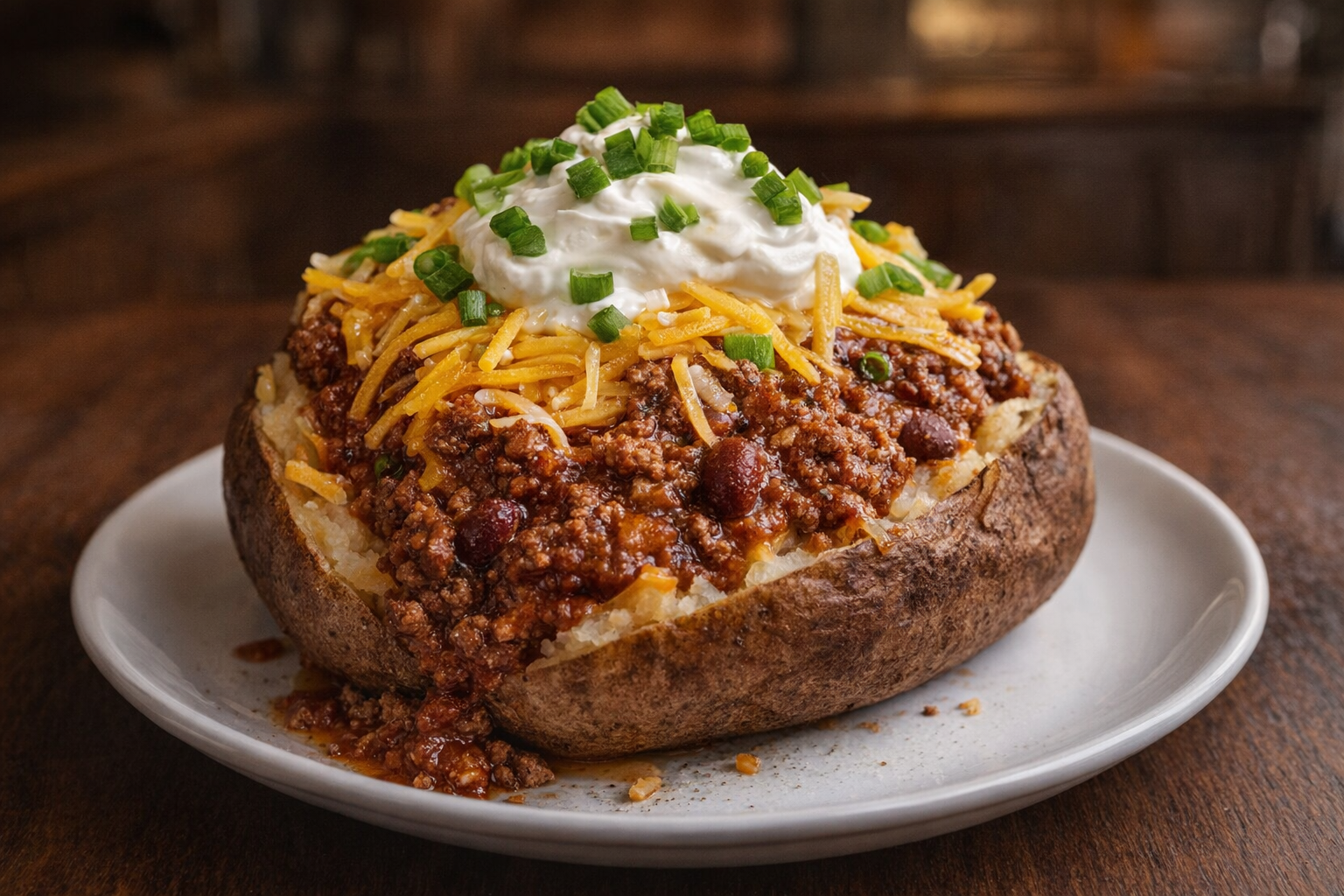
The baked potato: a humble dish that transcends simplicity. Its appeal lies in its adaptability. The crispy, slightly salty skin gives way to a fluffy, steamy interior, a blank canvas for endless culinary creations. From a simple pat of butter to fully loaded masterpieces, the baked potato is a universally loved comfort food.
This guide focuses on mastering the art of baking the perfect potato – achieving that perfect balance of crispy skin and fluffy interior. We'll explore variety selection, preparation techniques, and cooking methods to ensure you bake the best potato every time.
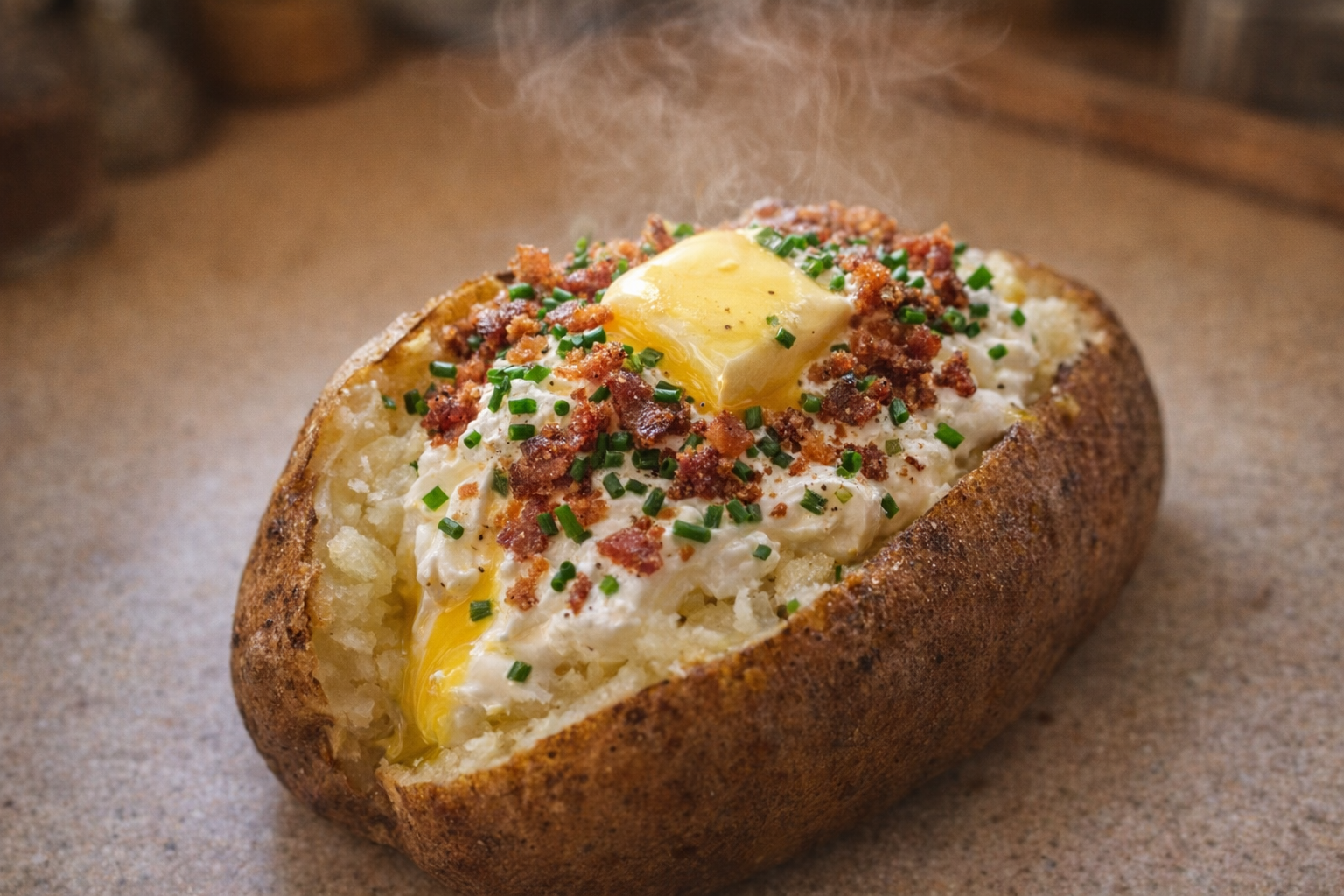
Understanding Potatoes
Not all potatoes are created equal when it comes to baking. Russet potatoes are the gold standard due to their high starch content and low moisture. This combination yields a light, fluffy interior and skin that crisps up beautifully. Yukon Gold potatoes, with their slightly waxy texture, are a good alternative if you prefer a creamier interior, but they won't achieve the same level of fluffiness as Russets. Avoid waxy potatoes like red potatoes or fingerlings, as they are better suited for boiling or roasting. When selecting your potatoes, choose firm, unblemished potatoes that are heavy for their size, indicating a good starch content.
Why Cook Potatoes This Way?
- Versatility: The baked potato serves as a blank slate for an array of toppings and fillings, from simple butter and seasonings to complex savory dishes.
- Flavor: Baking concentrates the potato's natural flavors, resulting in a richer, more satisfying taste compared to other cooking methods. The crispy skin provides a pleasant textural contrast.
- Convenience: Baking is largely hands-off, freeing you up to prepare other components of your meal.
Preparation (Mise en Place)
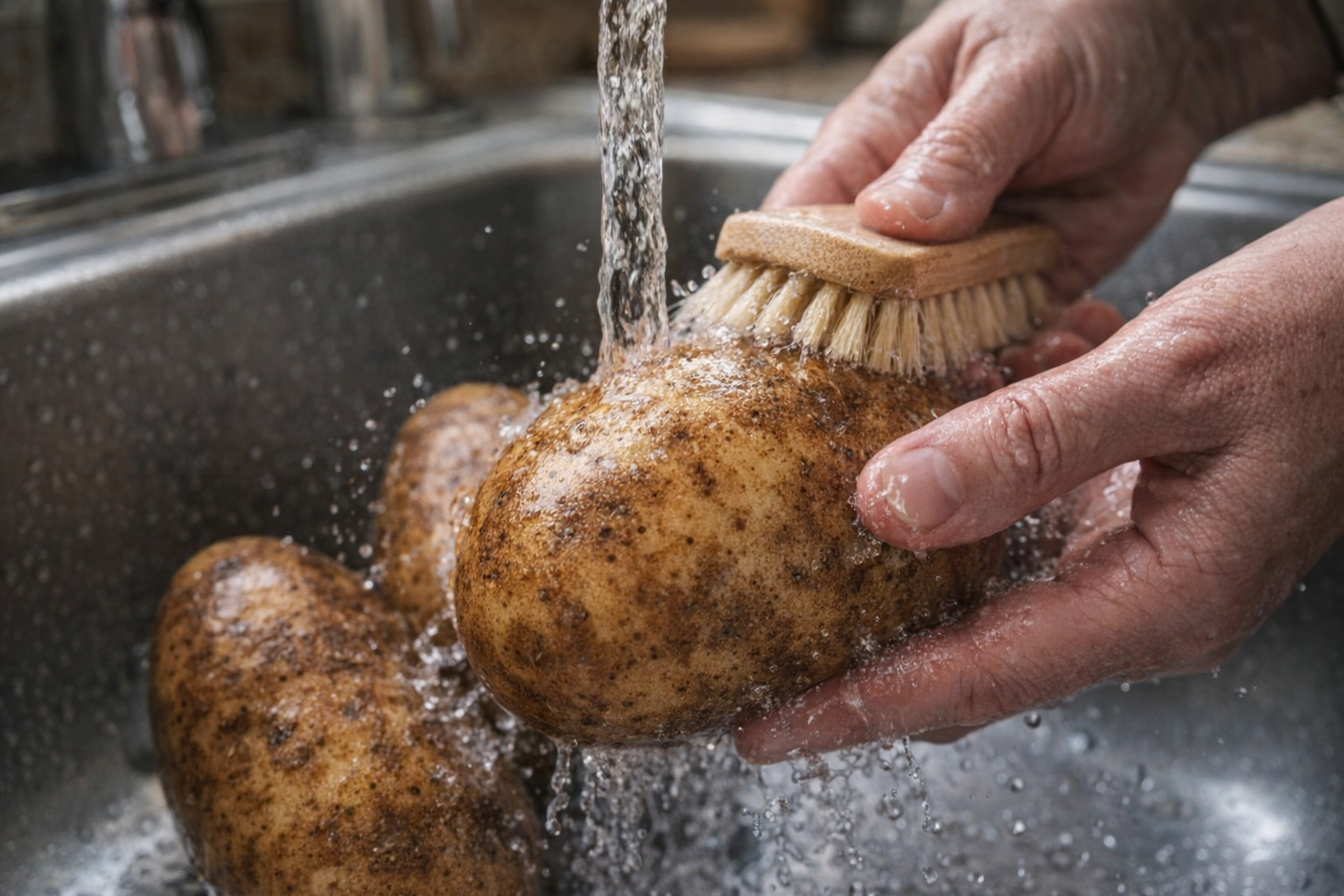
- Scrubbing: Thoroughly scrub the potatoes under cold running water to remove any dirt or debris. This is crucial for achieving crispy, flavorful skin.
- Drying: Pat the potatoes completely dry with paper towels. Excess moisture will steam the potatoes instead of allowing them to bake and crisp.
- Piercing: Pierce each potato several times with a fork. This allows steam to escape during baking, preventing explosions and ensuring even cooking.
- Oiling and Salting: Lightly coat the potatoes with olive oil or melted butter. This promotes browning and crisping of the skin. Sprinkle generously with coarse sea salt. The salt not only seasons the skin but also helps to draw out moisture.
Essential Tools
- Baking Sheet: A sturdy baking sheet is essential for even heat distribution.
- Fork: For piercing the potatoes.
- Pastry Brush or Paper Towel: To apply oil or melted butter.
- Oven Mitts: Crucial for handling hot potatoes.
The Cooking Method
Baking Potatoes in the Oven
This method produces evenly cooked potatoes with crispy skin and a fluffy interior.
Ingredients
- Russet potatoes: 4 medium-sized
- Olive oil or melted butter: 2 tablespoons
- Coarse sea salt: 1-2 teaspoons
Instructions
- Preheat your oven to 400°F (200°C). Ensure your oven rack is positioned in the middle.
- Prepare the potatoes as outlined in the "Preparation (Mise en Place)" section.
- Place the prepared potatoes directly on the baking sheet, ensuring they are not touching each other for even heat distribution.
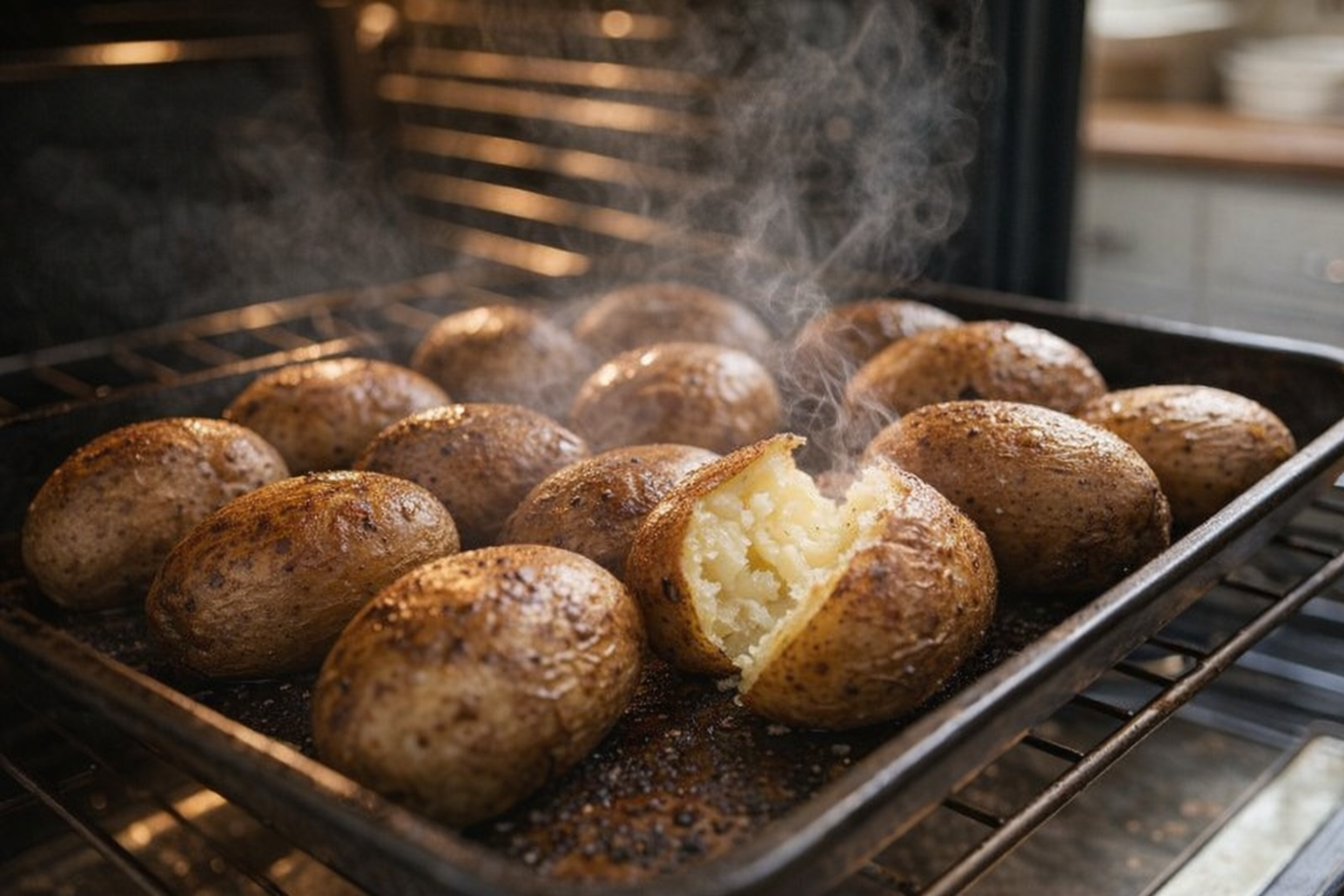
- Bake for 45-60 minutes, or until the potatoes are easily pierced with a fork and the skin is crispy and golden brown. The aroma of baked potato should fill your kitchen.
- Remove the potatoes from the oven and let them cool slightly before handling.
Cooking Time & Doneness Guide
- Cooking Time: Baking time varies depending on the size of the potatoes, but generally, it takes 45-60 minutes at 400°F (200°C).
- Internal Temperature: The internal temperature should reach 210°F (99°C) for optimal fluffiness.
Visual Cues
The potato is done when the skin is crispy and golden brown, and it yields easily when gently squeezed. A fork should pierce the potato with little to no resistance.
Tips for Perfection
- Don't Overcrowd the Pan: Ensure the potatoes have ample space on the baking sheet for even heat circulation.
- Use Coarse Salt: Coarse sea salt is preferable to fine table salt, as it adheres better to the potato skin and provides a more pronounced salty flavor.
- Don't Wrap in Foil: While foil can speed up cooking, it steams the potatoes instead of baking them, resulting in soft skin instead of crispy skin.
- Preheat Properly: Ensure your oven is fully preheated before placing the potatoes inside.
Storage & Reheating
Leftover baked potatoes can be stored in the refrigerator for up to 3-4 days. To reheat, wrap the potato in foil and bake at 350°F (175°C) for 15-20 minutes, or until heated through. Microwaving is also an option, but the skin will lose its crispness. For best results, consider using leftover baked potato in other dishes, such as potato salad or mashed potatoes.
Serving Suggestions
- Classic Loaded Potato: Top with butter, sour cream, shredded cheddar cheese, crumbled bacon, and chives.
- Chili Baked Potato: Ladle warm chili over a baked potato and top with shredded cheese and a dollop of sour cream.
- Broccoli and Cheese Baked Potato: Top with steamed broccoli and a generous helping of melted cheese sauce.
- Mediterranean Baked Potato: Top with hummus, crumbled feta cheese, chopped tomatoes, cucumbers, and olives.
💡 Pro Tips
- Choose Russet potatoes for baking because their high starch and low moisture content create the fluffiest interior texture.
- Thoroughly dry each potato after washing to ensure the skin becomes perfectly crispy instead of soggy during the baking process.
- Pierce the skin several times with a fork before placing them in the oven to allow steam to escape and prevent the potato from bursting.
- Coat the skin with a light layer of vegetable oil and coarse salt to achieve a flavorful, crackly exterior.
- Check the potato for doneness by ensuring a fork slides easily into the center or by using a thermometer to reach an internal temperature of 210°F.
Frequently Asked Questions
Ensure you're coating the potatoes with enough oil and salt before baking. The oil helps to crisp the skin, and the salt draws out moisture, preventing it from becoming overly tough. Also, make sure your oven temperature is accurate, as too high of a temperature can lead to a burnt exterior before the inside is cooked.
Yes, you can bake potatoes ahead of time. To reheat, wrap them in foil and bake in a preheated oven at 350°F (175°C) for about 15-20 minutes, or until heated through. Reheating can sometimes dry them out slightly, so adding a small pat of butter inside before wrapping in foil can help retain moisture.
Melted butter is a great substitute for olive oil, and it will add a rich flavor to the skin. You can also use other vegetable oils like canola or avocado oil, which have neutral flavors and high smoke points, making them suitable for baking at higher temperatures.
A fully cooked baked potato will feel soft when gently squeezed. You can also insert a fork into the center; it should slide in easily with little resistance. If the potato is still firm, continue baking for a few more minutes and check again.