 delishing
How to Cook Duck: The Best Methods

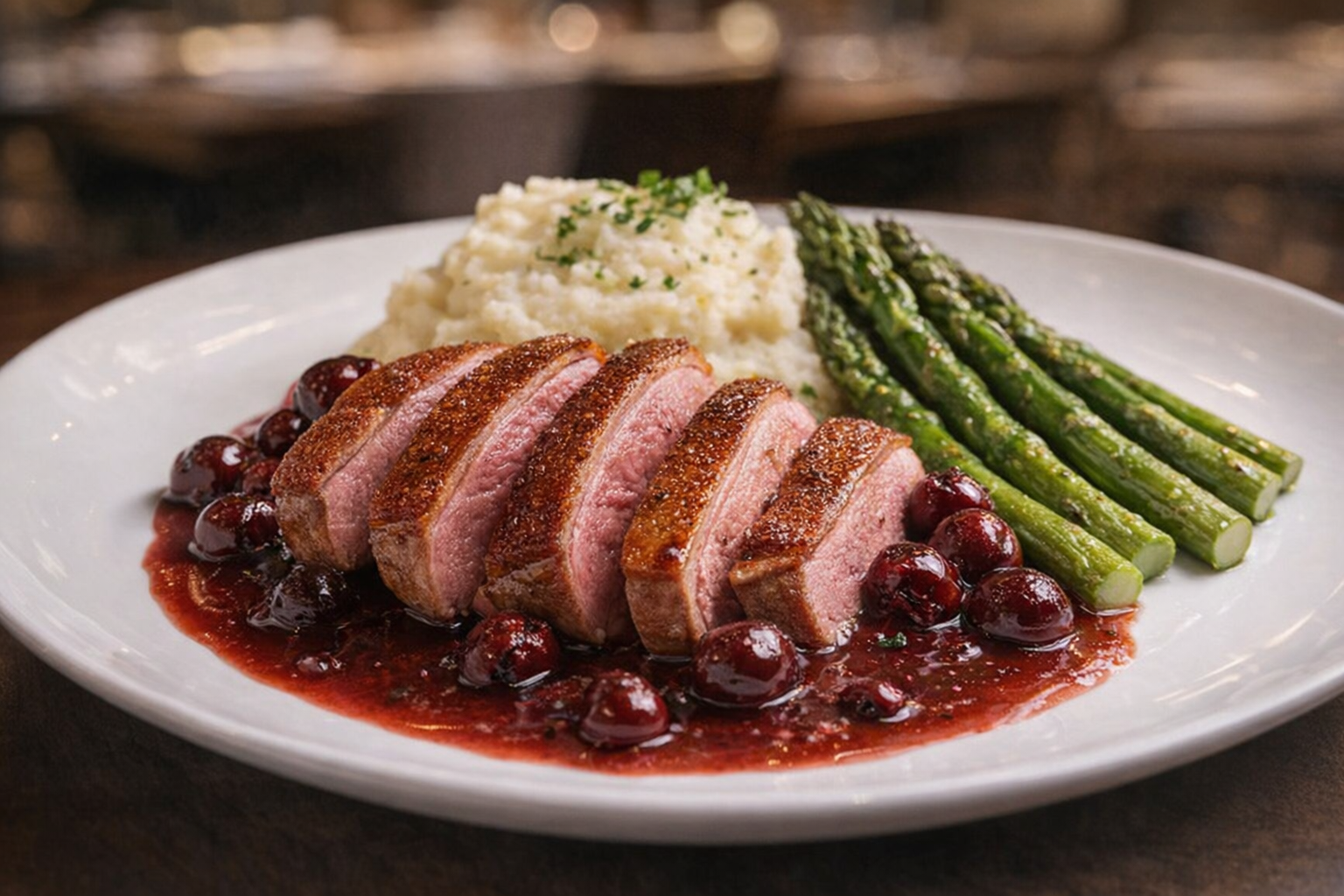
Duck, with its rich, gamey flavor and succulent texture, offers a dining experience unlike any other poultry. Often reserved for special occasions, duck is surprisingly versatile and can be prepared using a variety of cooking methods to achieve different flavor profiles and textures. Whether you prefer crispy skin, tender meat that falls off the bone, or a smoky char, mastering duck cookery opens up a world of culinary possibilities.
This guide will explore five distinct methods for cooking duck, from the quick and easy pan-sear to the slow and deeply flavorful braise. Each method will be detailed, providing you with the knowledge and confidence to create a memorable duck dish at home. We’ll delve into ingredient selection, preparation techniques, and cooking times, ensuring you achieve perfect results every time.
Understanding Duck
Duck comes in various forms, each suited for different cooking methods. When purchasing duck, consider the following:
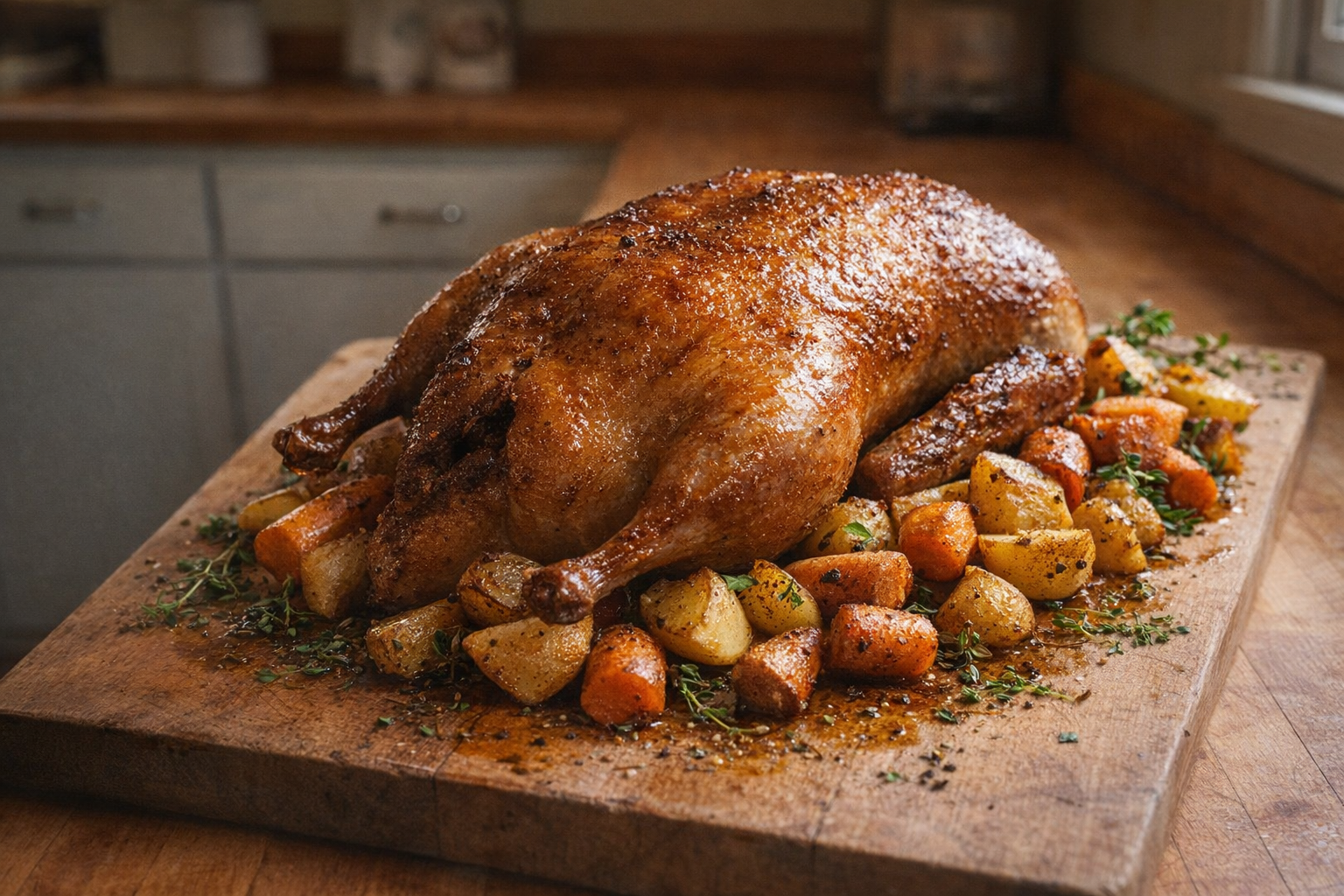
- Whole Duck: Ideal for roasting, offering a combination of dark and white meat, as well as bones for making stock. Look for ducks that are plump and have a good layer of fat under the skin.
- Duck Breast: Prized for its rich flavor and tender texture, duck breast is best pan-seared or grilled. Choose breasts with a thick layer of fat for optimal crispiness.
- Duck Legs: Perfect for braising or confit, duck legs are rich in flavor and become incredibly tender with slow cooking.
- Duck Fat: A valuable byproduct of duck cookery, duck fat can be rendered and used for roasting vegetables, adding richness to sauces, or even frying potatoes. Save any rendered duck fat for future culinary adventures.
Why Cook Duck This Way?
- Versatility: Duck can be adapted to a wide range of cuisines and flavor profiles, from classic French confit to Chinese-inspired braises.
- Flavor: Duck offers a unique, rich flavor that is distinct from chicken or turkey, making it a memorable and satisfying meal.
- Convenience: While some duck preparations require time, methods like pan-searing and grilling can be quick and easy options for a weeknight dinner.
Preparation (Mise en Place)
Proper preparation is essential for successful duck cookery. Before you begin, consider the following steps:
- Thawing (if using frozen duck): Thaw the duck in the refrigerator for 24-48 hours, or until completely thawed.
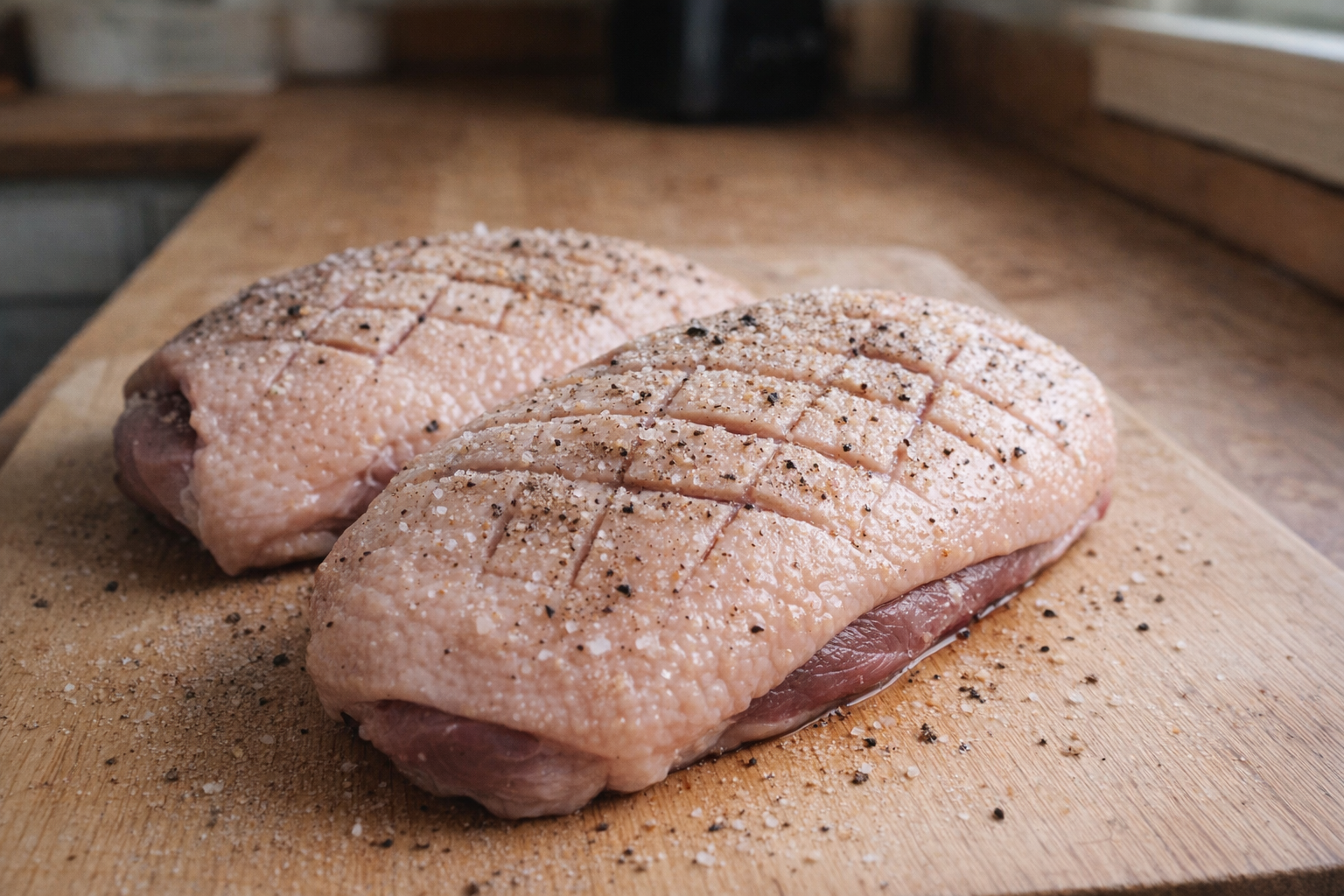
- Scoring the Skin: Scoring the skin of the duck allows fat to render more easily, resulting in crispier skin. Use a sharp knife to make shallow cuts in a crosshatch pattern, being careful not to cut into the meat.
- Drying the Skin: Pat the duck skin dry with paper towels to remove excess moisture. This will help the skin crisp up during cooking.
Essential Tools:
- Cast Iron Skillet: Provides excellent heat retention and distribution, ideal for pan-searing and roasting.
- Roasting Pan with Rack: Allows for even cooking and prevents the duck from sitting in its own fat.
- Sharp Knife: Essential for scoring the skin and breaking down the duck, if necessary.
- Meat Thermometer: Ensures the duck is cooked to the proper internal temperature for safety and optimal texture.
The Cooking Methods
We will now explore five distinct methods for cooking duck, providing detailed instructions and tips for achieving perfect results.
Pan-Seared Duck Breast
Pan-searing duck breast is a quick and easy way to achieve crispy skin and tender, juicy meat.
Ingredients:
- 4 duck breasts (each breast weighs between 4-5 ounces)
- Kosher salt
- ½ cup white wine
- 1 ½ cups chicken stock
- 4 tablespoons unsalted butter
- 1 fresh orange
- ½ teaspoon black pepper
Instructions:
- Prepare the Duck: Score the skin of each duck breast in a crosshatch pattern, being careful not to cut into the meat. Season both sides with kosher salt. The salt will help draw out moisture and crisp the skin.
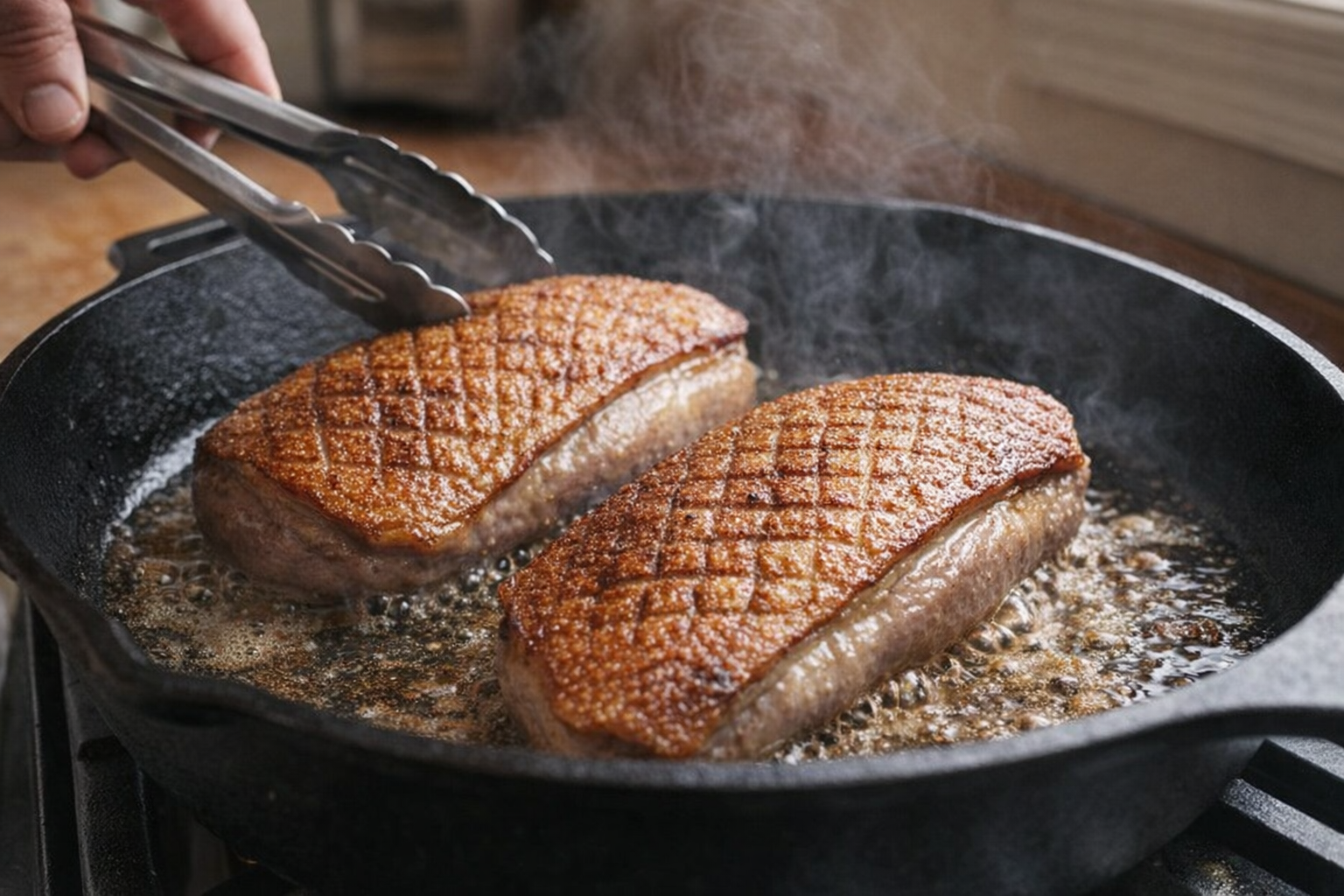
- Start the Cook: Place the duck breasts skin-side down in a cold skillet. Turn the heat to medium-low. As the pan heats, the fat will slowly render from the skin. Listen for a gentle sizzle.
- Render the Fat: Cook the duck breasts skin-side down for 15-20 minutes, or until the skin is golden brown and crispy. Spoon off the rendered duck fat as it accumulates in the pan, reserving it for future use. The aroma should be rich and savory.
- Sear the Meat: Flip the duck breasts and sear for 3-5 minutes, or until the internal temperature reaches 130°F for medium-rare. Use a meat thermometer to ensure accuracy.
- Rest the Duck: Remove the duck breasts from the pan and let them rest for 5-10 minutes before slicing. Resting allows the juices to redistribute, resulting in a more tender and flavorful piece of meat.
- Make the Sauce: Drain all but 1 tablespoon of duck fat from the pan. Add the white wine and deglaze the pan, scraping up any browned bits from the bottom. The aroma will be sharp and fruity as the wine reduces.
- Reduce the Sauce: Add the chicken stock and simmer until the sauce has reduced by half. This will concentrate the flavors and create a richer sauce.
- Finish the Sauce: Remove the pan from the heat and whisk in the butter until melted and emulsified. Stir in the orange zest and juice, and season with salt and pepper to taste. The sauce should be glossy and flavorful.
- Serve: Slice the duck breasts and spoon the orange sauce over the top. Serve immediately.
Roasted Whole Duck
Roasting a whole duck is a classic method that results in crispy skin and moist, flavorful meat.
Ingredients:
- One whole duck (5-6 pounds)
- 2 cups boiling water
- 2 teaspoons salt
- 1 teaspoon black pepper
- 4 medium potatoes
- 2 medium carrots
- 1 parsnip
Instructions:
- Prepare the Duck: Preheat the oven to 425°F. Remove any giblets or organs from the cavity of the duck. Pat the duck dry with paper towels. Prick the skin all over with a fork to help the fat render.
- Scald the Duck: Pour boiling water over the duck, both inside and out. This will help tighten the skin and promote crispiness. Pat the duck dry again.
- Season the Duck: Season the duck generously with salt and pepper, both inside and out.
- Roast the Duck (Phase 1): Place the duck breast-side up on a roasting rack in a roasting pan. Roast for 45 minutes. The skin should begin to brown and the fat will start to render.
- Drain the Fat: Remove the duck from the oven and carefully drain off the rendered fat from the roasting pan. Reserve the fat for future use.
- Flip the Duck: Flip the duck breast-side down. Roast for another 25 minutes.
- Add the Vegetables: While the duck is roasting, prepare the vegetables. Peel the potatoes, carrots, and parsnip, and cut them into large chunks. Add the vegetables to the roasting pan around the duck.
- Roast the Duck (Phase 2): Return the duck to the oven and roast for another 20 minutes.
- Flip the Duck Again: Flip the duck breast-side up. Roast for a final 30 minutes, or until the internal temperature reaches 165°F in the thickest part of the thigh. Use a meat thermometer to ensure accuracy.
- Rest the Duck: Remove the duck from the oven and let it rest for 10-15 minutes before carving.
- Serve: Carve the duck and serve with the roasted vegetables.
Grilled Duck Breast
Grilling duck breast imparts a smoky flavor and creates a crispy skin.
Ingredients:
- 2 duck breasts with skin
- Kosher salt
- Fresh-ground black pepper
- Charcoal for grilling
Instructions:
- Prepare the Grill: Prepare a charcoal grill with a medium-hot fire.
- Prepare the Duck: Score the skin of the duck breasts in a crosshatch pattern. Season both sides with kosher salt and fresh-ground black pepper.
- Render the Fat: Place the duck breasts skin-side down in a cast iron skillet on the grill. Cook for 10-15 minutes, or until the skin is golden brown and crispy. Pour off the rendered duck fat as it accumulates.
- Grill the Meat: Flip the duck breasts and grill for 3-5 minutes, or until the internal temperature reaches 130°F for medium-rare.
- Rest the Duck: Remove the duck breasts from the grill and let them rest for 5-10 minutes before slicing.
- Serve: Slice the duck breasts and serve immediately.
Braised Duck
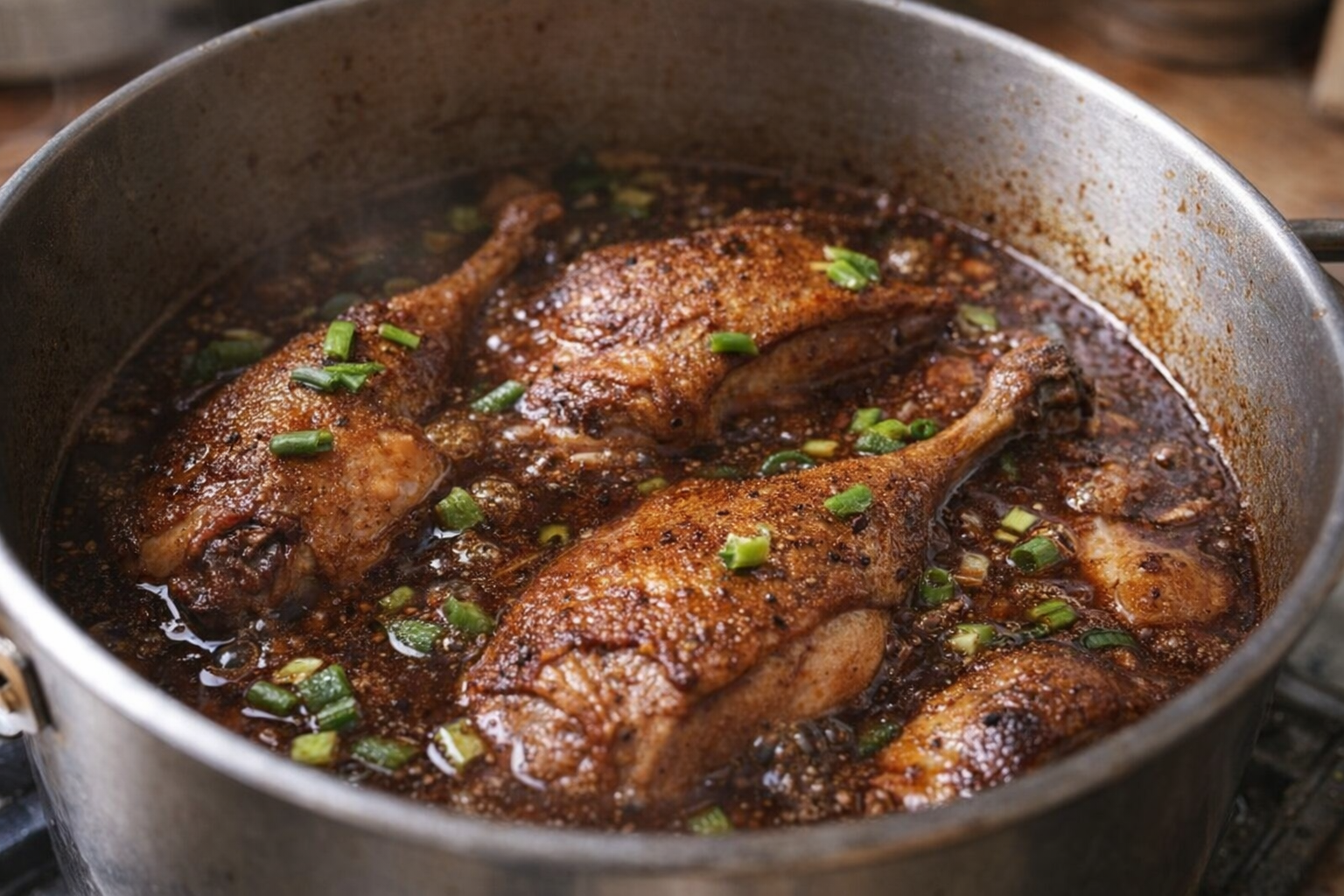
Braising duck creates tender, flavorful meat infused with spices.
Ingredients:
- Duck pieces (2 1/2 to 3 pounds)
- 4 star anise
- 5 cardamom pods
- 6 cloves
- 1 teaspoon Sichuan peppercorns
- 1 teaspoon white peppercorns
- 1 teaspoon cumin seeds
- 1 cinnamon stick
- ½ cup Shaoxing wine
- 4 cups water
- 2 tablespoons regular soy sauce
- 2 tablespoons dark soy sauce
- 2 tablespoons brown sugar
- 3 inches fresh ginger
- Cheesecloth for spice bundle
Instructions:
- Prepare the Spice Bundle: Place the star anise, cardamom, cloves, Sichuan peppercorns, white peppercorns, and cumin seeds in a piece of cheesecloth. Tie the cheesecloth into a bundle.
- Brown the Duck: Heat a large Dutch oven or heavy-bottomed pot over medium-high heat. Add the duck pieces and cook until browned on all sides. Remove the duck from the pot and set aside.
- Deglaze the Pot: Add the Shaoxing wine to the pot and deglaze, scraping up any browned bits from the bottom.
- Add the Braising Liquid: Add the water, soy sauce, dark soy sauce, brown sugar, cinnamon stick, ginger, and spice bundle to the pot. Bring to a simmer.
- Braise the Duck: Return the duck to the pot. Cover and simmer for 2-2 1/2 hours, or until the meat is very tender and falls off the bone.
- Reduce the Sauce: Remove the duck from the pot and set aside. Remove the spice bundle and cinnamon stick from the sauce. Simmer the sauce over medium-high heat until it has reduced and thickened slightly.
- Serve: Return the duck to the pot and toss to coat with the sauce. Serve over rice or noodles.
Duck Confit
Confit transforms duck legs into melt-in-mouth meat through slow cooking in duck fat.
Ingredients:
- 6 duck leg and thigh pieces
- 6 cumin seeds
- 12 coriander seeds
- 3 juniper berries
- 50g sea salt
- 1 teaspoon black peppercorns
- Fresh thyme bunch
- 1 rosemary branch
- 2 bay leaves
- 1 garlic clove
- 500g duck or goose fat
Instructions:
- Cure the Duck: In a bowl, combine the cumin seeds, coriander seeds, juniper berries, sea salt, and black peppercorns. Rub the mixture all over the duck legs and thighs. Place the duck in a container with the thyme, rosemary, garlic, and bay leaves. Cover and refrigerate for 24-48 hours.
- Render the Fat: Preheat the oven to 275°F. Rinse the duck legs and thighs and pat them dry.
- Confit the Duck: Place the duck legs and thighs in a Dutch oven or heavy-bottomed pot. Cover with the duck or goose fat. The duck should be completely submerged in the fat.
- Slow Cook: Bake in the preheated oven for 2 1/2-3 hours, or until the meat is very tender and falls off the bone.
- Cool and Store: Remove the duck from the oven and let it cool in the fat. Once cooled, store the duck in the fat in the refrigerator for up to several weeks.
- Crisp the Skin: Before serving, remove the duck from the fat. Heat a skillet over medium-high heat. Place the duck skin-side down in the skillet and cook until the skin is crispy and golden brown.
- Serve: Serve the duck confit with potatoes, vegetables, or a salad.
Cooking Time & Doneness Guide
- Pan-Seared Duck Breast: 15-20 minutes skin-side down, 3-5 minutes meat-side down. Internal temperature: 130°F for medium-rare.
- Roasted Whole Duck: 2 hours 15 minutes total. Internal temperature: 165°F in the thickest part of the thigh.
- Grilled Duck Breast: 10-15 minutes skin-side down in skillet, 3-5 minutes meat-side down on the grill. Internal temperature: 130°F for medium-rare.
- Braised Duck: 2-2 1/2 hours. The meat should be very tender and fall off the bone.
- Duck Confit: 2 1/2-3 hours. The meat should be very tender and fall off the bone.
Visual Cues:
- Pan-Seared Duck Breast: The skin should be golden brown and crispy. The meat should be slightly pink in the center.
- Roasted Whole Duck: The skin should be golden brown and crispy. The juices should run clear when the thigh is pierced with a fork.
- Grilled Duck Breast: The skin should be crispy and slightly charred. The meat should be slightly pink in the center.
- Braised Duck: The meat should be very tender and fall off the bone.
- Duck Confit: The meat should be very tender and fall off the bone. The skin should be crispy when pan-fried before serving.
Tips for Perfection
- Don't Overcrowd the Pan: When pan-searing duck breast, make sure not to overcrowd the pan. This will lower the temperature of the pan and prevent the skin from getting crispy. Cook the duck in batches if necessary.
- Score the Skin Properly: Scoring the skin of the duck is essential for rendering the fat and achieving crispy skin. Make sure to score the skin in a crosshatch pattern, being careful not to cut into the meat.
- Use a Meat Thermometer: A meat thermometer is the best way to ensure that the duck is cooked to the proper internal temperature. This will help prevent overcooking and ensure that the meat is safe to eat.
- Rest the Duck: Resting the duck after cooking is essential for allowing the juices to redistribute and create a more tender and flavorful piece of meat. Let the duck rest for at least 5-10 minutes before slicing.
Storage & Reheating
Store leftover duck in an airtight container in the refrigerator for up to 3-4 days. To reheat, you can pan-fry, bake, air fry or microwave:
- Pan Method: Start with a cold, non-stick pan and place the duck pieces skin-side down. The gentle warmth from a medium heat setting slowly restores both meat and skin. A simple flip after three minutes lets the other side warm evenly. The direct heat keeps the outside perfectly crispy while warming the inside.
- Oven Method: The oven creates an even, gentle heat that works well for duck. Wrap the pieces loosely in foil, leaving space for steam release. A temperature of 350°F for fifteen minutes warms the meat thoroughly. Remove the foil during the last five minutes to restore the skin's crispiness.
- Air Fryer Method: Air fryers provide excellent results with minimal effort. Set the temperature to 350°F and sort the pieces in a single layer. Four minutes of heating restores the perfect balance between crispy exterior and juicy interior. The circulating hot air ensures even warming throughout.
- Microwave Method: Microwaving serves as a practical option when time matters most. Place duck portions on a microwave-safe dish and cover them with a damp paper towel. Short bursts of thirty seconds prevent overheating. This method keeps the meat moist, though the skin might lose some crispiness.
Serving Suggestions
- Duck Breast with Cherry Sauce: Serve pan-seared duck breast with a sweet and tangy cherry sauce.
- Duck Confit with Potatoes: Serve duck confit with roasted potatoes and a simple salad.
- Duck Tacos: Shred braised duck and serve in tacos with your favorite toppings.
- Duck and Waffles: A savory twist on a classic dish, serve crispy duck confit with waffles and maple syrup.
💡 Pro Tips
- Score the duck breast skin in a crosshatch pattern without cutting into the meat to help the fat render more efficiently. This ensures a crispier texture and prevents the breast from curling during the searing process.
- Start searing the duck breast in a cold skillet over low-medium heat to gradually melt the fat without burning the skin. This technique ensures the skin becomes thin and crispy while the meat stays tender.
- Periodically pour off excess rendered fat from the pan during cooking and save it to use later for roasting flavorful potatoes.
- Allow the duck to rest for at least ten minutes before slicing to ensure the juices redistribute and the meat remains succulent.
- Use an instant-read thermometer to pull the duck off the heat at 135°F for a perfect medium-rare finish.
Frequently Asked Questions
Use a sharp knife and make shallow cuts in a crosshatch pattern, being careful to only cut through the skin and fat layer. Avoid cutting into the flesh, as this will cause the meat to dry out during cooking.
Yes, duck breasts are a great alternative! Reduce the cooking time significantly; pan-searing or grilling duck breasts usually takes around 6-8 minutes per side for medium-rare, depending on the thickness.
Leftover cooked duck should be stored in an airtight container in the refrigerator for up to 3-4 days. Ensure the duck has cooled completely before refrigerating to prevent bacterial growth.
Rendered duck fat is incredibly versatile! Use it to confit garlic, make flavorful croutons, or even spread it on toast with a sprinkle of sea salt for a decadent snack.